Some of the most meaningful childhood memories begin with a simple phrase:
“Can you read me one more story?”
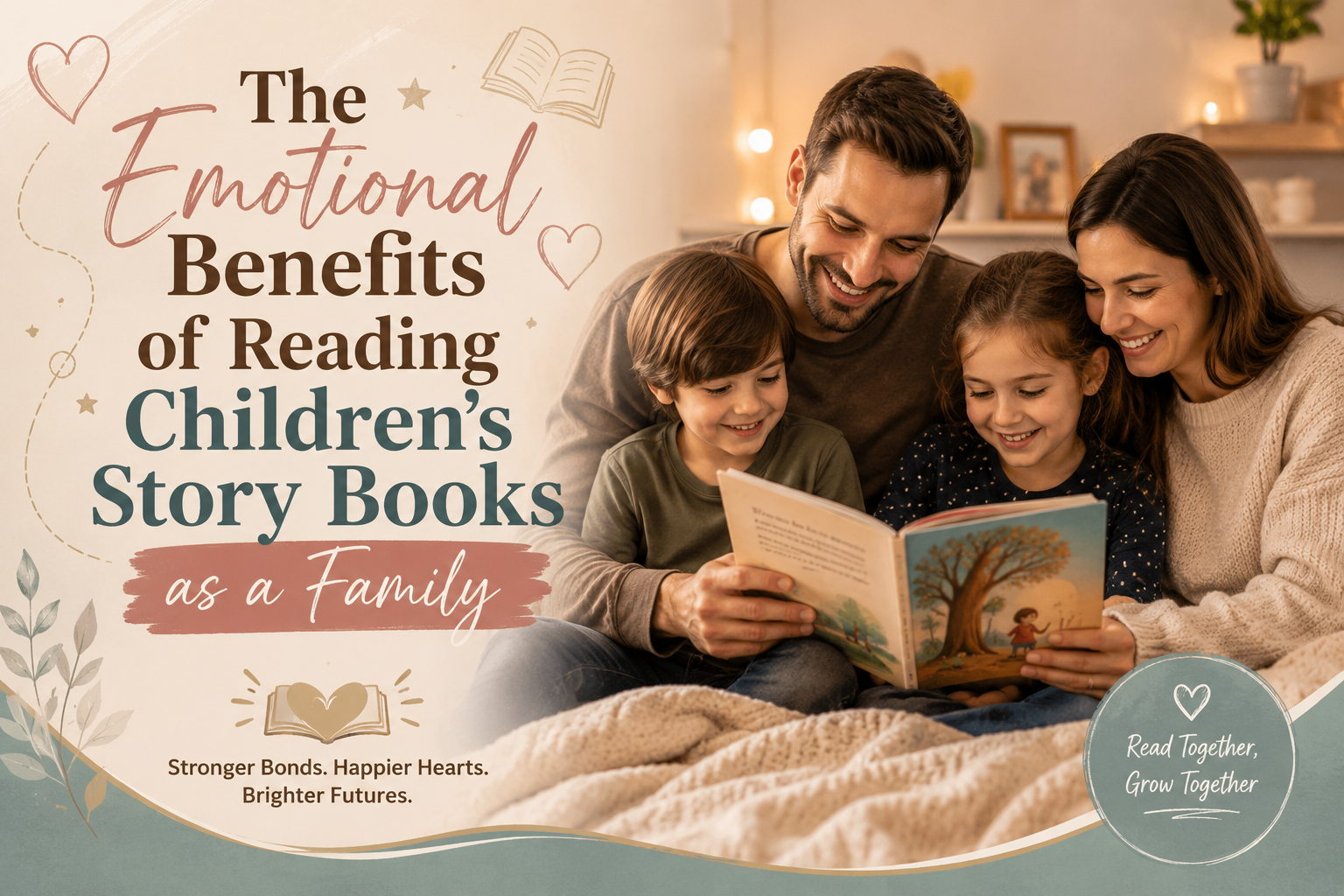
Family reading time is about far more than improving vocabulary or helping children learn to read. It creates emotional connection, comfort, and lasting memories that children carry into adulthood.
Today, shared reading moments give families something increasingly valuable: uninterrupted time together. And when parents choose children’s story books about friendship, kindness, and love, those moments become even more meaningful.
Stories help children understand emotions in a safe and gentle way. They teach empathy naturally. They encourage conversation. Most importantly, they help children feel connected to the people reading beside them.
Why Reading Together Matters Emotionally
Children thrive on emotional security and routine. Reading together creates both.
Whether it is a bedtime story, an afternoon cuddle on the couch, or a quiet weekend reading session, these moments help children feel safe, loved, and emotionally supported.
Books about friendship for kids are especially powerful because friendship is one of the first important emotional relationships children experience outside their immediate family.
Through stories, children begin learning:
- How kindness affects others
- Why friendship matters
- How to express emotions
- What empathy looks like
- How small moments create meaningful bonds
These lessons often stay with children far longer than direct instruction.
Stories Help Children Understand Love and Connection
Children connect deeply with stories that feel emotionally real.
That is one reason My Best Friend Joe resonates so naturally with families. The story captures the tender relationship between a little boy and his Uncle Joe through simple everyday moments like building LEGO houses, sharing dinner, taking rides together, and FaceTime calls before bed.
The emotional beauty of the story comes from its authenticity.
The little boy’s excitement when hearing Joe knock at the door or proudly calling him “my best friend Joe” reflects the innocent, wholehearted love children express so naturally.
For parents reading aloud, stories like this create opportunities for emotional conversations that might not happen otherwise.
Simple questions like:
- “Who is your best friend?”
- “What makes someone kind?”
- “How do you show people you love them?”
can help children open up emotionally in meaningful ways.
Reading Together Builds Stronger Family Bonds
One of the greatest emotional benefits of family reading is connection.
Children may not remember every detail of a story years later, but they will remember how story time made them feel.
They remember laughter.
They remember closeness.
They remember feeling important and heard.
Reading together also encourages communication. Children often talk more openly after hearing a story because books help them process feelings through characters and situations.
That emotional connection becomes even stronger when stories reflect real-life family experiences and relationships.
In My Best Friend Joe, family gatherings, dinner conversations, and playful everyday interactions remind readers that love is often built in ordinary moments.
Friendship Stories Teach Empathy Naturally
The best children’s story books about friendship do more than entertain. They help children develop emotional awareness.
As children follow characters through joyful, sad, or comforting moments, they begin learning how emotions affect others.
In My Best Friend Joe, readers eventually discover that Joe quietly carries loneliness and grief after losing people he deeply loved. The little boy’s unconditional affection brings comfort and healing into Joe’s life.
That emotional layer gives the story depth for both children and adults.
It also gently teaches an important lesson:
Even small acts of love can make a big difference in someone’s life.
How Parents Can Make Story Time More Meaningful
Reading together does not have to feel perfect or structured. The most meaningful moments are often the simplest.
Here are a few ways to make story time more emotionally engaging:
Ask Feeling-Based Questions
Instead of focusing only on the plot, ask children how the characters may feel and why.
Let Children Participate
Allow children to point at pictures, predict what happens next, or talk about their favorite moments.
Connect Stories to Real Life
Children understand stories more deeply when they relate them to their own experiences and friendships.
Revisit Favorite Books Often
Children love repetition because familiar stories create emotional comfort and security.
A Story Families Can Read Together
Gina Marie’s background in English, communication, and special education brings warmth and emotional understanding to her storytelling. Her ability to capture genuine childhood emotion makes My Best Friend Joe a heartfelt reading experience for both children and adults.
For families searching for books about friendship for kids that encourage empathy, emotional connection, and meaningful family conversations, this story offers a comforting reminder that love often lives in the smallest everyday moments.
Final Thoughts
Reading together is not just about books.
It is about connection.
The stories families share help children feel emotionally secure, understood, and loved. They create opportunities for empathy, communication, and lasting memories that extend far beyond childhood.
And sometimes, one heartfelt story about friendship can become a memory a child carries forever.